7 Steps to Build Wealth Before Retirement
Transcript
Hi, I'm Jason Vincent, Co-founder and President of Matco Financial.
I've worked with hundreds of clients over the last 30 plus years in all different categories, from an accumulator who's building wealth to retirees who are transitioning to now using their wealth to supplement their income to, obviously, the third type of client, which is the succession plan or the transfer client, is now trying to transition their assets to the next generation.
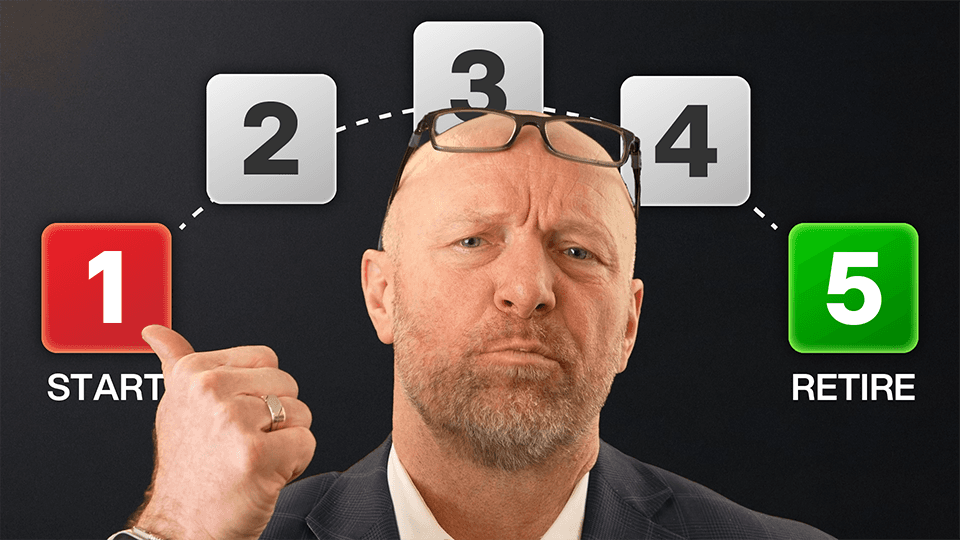
Today, though, I want to talk to you as the accumulator, the individual who was working hard to try and save enough money so that they can retire and hopefully maintain, if not better, their lifestyle in retirement. So let's talk today about the seven steps as an accumulator to build wealth.
Let's set the tone of an accumulator. Usually accumulator is from ages 18 to 55. But let's talk about an example. You're single. You're about to move in with your partner. You're thinking about marriage. Maybe. Maybe you're thinking about buying a house, a dog, getting some children. But all these take money, of course, to be an accumulator of wealth. All of these expenses, one needs a roadmap, a macro roadmap. You need to follow seven steps to accumulate wealth.
First step one let's complete a financial plan. It's difficult to arrive on time and without incident, to any destination, without a roadmap. Our financial plan is designed for you to build your personal balance sheet, which is understanding your assets and liabilities, as well as your income statement, which is understanding your revenues and your expenses.
Essentially, there are plans within the plan. What am I mean by this? Retirement and financial flexibility is our ultimate goal. But within that we have what I call micro planning. Let's give you some examples. Saving for a vacation, a new car or having children. With these numbers, we begin to understand the degree of financial flexibility you have and align your future financial goals with your current spending habits. It is at this step where we begin to highlight the following principles.
Number one, save before you spend. Starting with an emergency fund, which should be 2 to 3 months of your household salary. Number two buying appreciating assets and stay away from those depreciating assets like cars. Number three concentrate to make money and diversify to keep money.
Let's move to step two. Understanding your risks and your partner's risk tolerances. Some people like to drive fast, jump out of planes, own high risk stocks while others drive the speed limits. Don't take any risks and buy gases. Partners usually have different risk tolerances and is it? It is very important for the relationship, but also to understand expected returns and different risk levels. Generally speaking, accumulators should take some risks to grow their assets, but we need to understand how this fits into the planning puzzle.
Step three pay off your debt and your mortgage before opening a non-registered investment account. There was a very low probability where you can consistently find after tax investment returns that will be better than interest rates charged on credit card debt or even your mortgage. Retiring debt is very important step in achieving financial freedom and accumulating wealth. Yes, there are unique circumstances where debt can be advantageous. I sometimes call that debt performing debt. Most of you don't have performing debt, but let's leave that for another conversation.
Step four set up an RRSP before any other account. It's a juggling act. Although you still have a mortgage or may have a mortgage, it's advisable to set up an RRSP in Canada. Owning a home is a very good investment because there's no taxes paid on capital gains. However, the Government of Canada also encourages us to save by enabling individuals to contribute to an RRSP.
By having this structure where you get to lower your taxable income with contributions to the RRSP and essentially pay less taxes, plus own tax deferred returns, these tax deferred returns make it worthwhile for homeowners with mortgages. The balance of paying off their house versus growing a retirement portfolio. When you receive your tax refund for investing in that RRSP, it's free money. Make an extra, extra lump sum payment to your mortgage. It makes a huge difference, especially if you're early on in your mortgage.
Step five if your RRSP is maximized and you have children, open an RESP. If both of your RRSP and your RESP are topped off, then set up a TFSA account. Only after all of these are topped off, all these accounts are full should you set up a non-registered account. There is one curveball. There's a new account called an FHSA account. This is an account for first time homebuyers who qualifies for first time homebuyers. And yes, we should set up an FHSA account if in fact you are a first time homebuyer. But let's leave that to another session.
Step six let's complete your estate plan. I call the three pack if it's just you or the six pack if there's two of you. What is that? A will, enduring power of attorney and a health directive. With only 40% of people having completed a will, many individuals are left with the public trustee managing your affairs after death with little idea of your wishes or what to do with your assets. If you really hate your family or friends, don't do any estate planning.
Last but not least. Step seven review and update yearly. This will ensure that your plan, your risk tolerances, your investment accounts, your goals are all in line with your plan, and we're building wealth for your retirement.
As basic as this sounds. If you just follow these seven steps of accumulating wealth to retirement, you're ahead of 90% of your fellow Canadians. Seven easy steps will achieve your roadmap so that you can live a lifestyle as well or better than what you're currently living now, which is what it's all about.
If you have an interest, give me a call or send me a note. Talk to you soon.



Receive The Matco Note—our monthly market thinking. Unsubscribe anytime.
Want to discuss what you've heard?
Book a conversation with a portfolio manager to talk through the ideas in this video and how they relate to your situation.
Book a Meeting