
Animal spirits were strong throughout the first quarter of 2025. Bullish feelings peaked in mid-February, but economic policy changes from Washington brought the bears out of hibernation by the second half of the quarter.
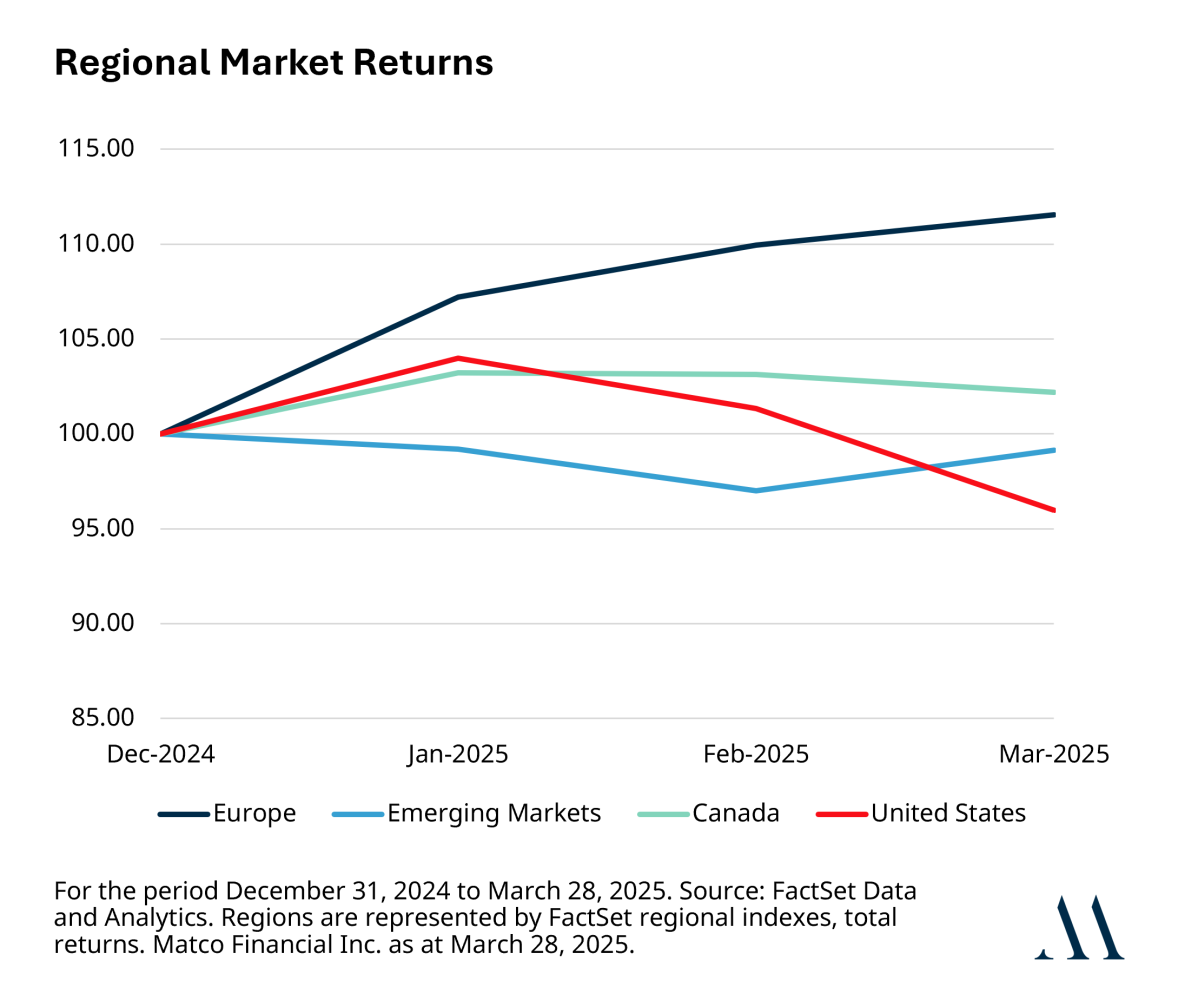
Global stock markets reacted differently to the news, showing why it’s important for investors to stay diversified. As I’ve mentioned before, the investment landscape in 2025 looked very different depending on the region. The U.S. stock market was priced high, while international markets in Europe and Emerging Markets were much cheaper. So far this year, international markets have done well, while the U.S. market has turned negative.
Tariffs are a good example of how policies can affect consumers. Take the Ford F150 truck. It’s built in the U.S., but many parts come from Canada and Mexico. The materials for these parts are sourced through a global supply chain, including metals from around the world and electrical parts mostly made in Asia. Because the supply chain is so global, adding tariffs to these parts will likely increase production costs.
Now, people are starting to realize that higher prices could be coming, and that’s showing up in inflation expectations. How much the Trump administration enforces these tariffs will decide how much pricing pressure the U.S. economy faces moving forward. Rising inflation expectations are already starting to hurt consumer confidence.

When consumer confidence drops, U.S. stock prices have usually gone down too. This time isn’t any different.
The decline in consumer confidence in 2025 supports our view from last month that a stock market drop was on the way, and investors should be ready to buy the dip. With the labour market still strong, investors should focus on the first-quarter 2025 earnings reports coming out in April and May. Changing company guidance may keep putting pressure on U.S. stock prices. But for investors putting together the bigger picture, there are reasons to get more excited as the year goes on.
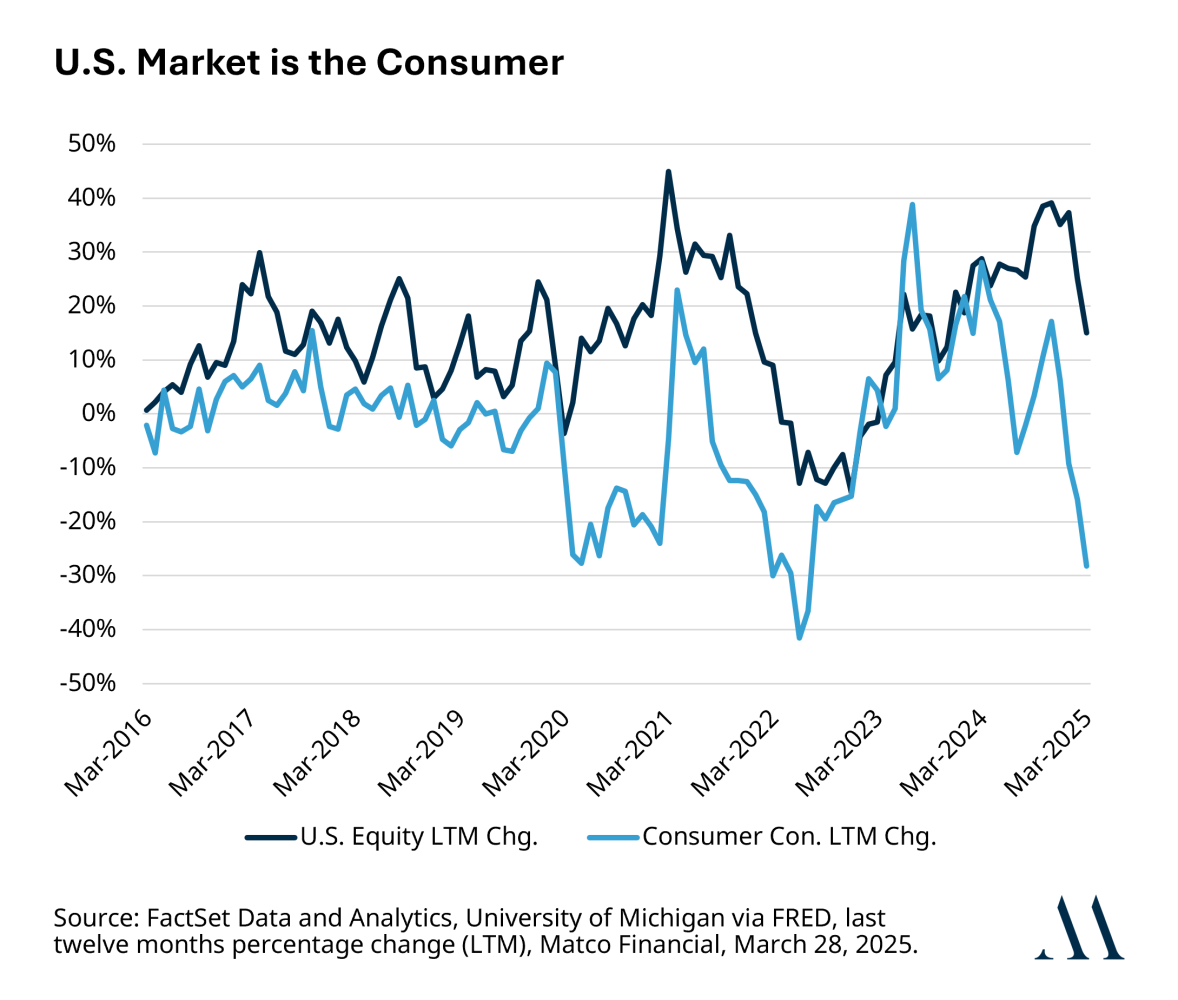
For investors, the key takeaway here is a bit surprising: When consumer confidence falls, the negative mood often creates a buying opportunity for those who can handle some risk and have a long-term view.
Interested in learning more about how I have been managing the Matco Global Equity Fund? Watch out for our first quarter 2025 recap video the second week of April. It will be posted on LinkedIn and YouTube.