The US bombed Iran’s Supreme Leader. Oil Spiked 20%. And one of America’s biggest private lenders locked investors out of their own money. February didn’t disappoint.
Welcome to Read Between the Lines, I’m Trevor Galon Chief Investment Officer at Matco Financial.
Looking first at global equity markets, performance continues to broaden beyond the United States. Brazil sits in pole position, up 21%, Australia is up 15%, Japan and emerging markets are up 14%, while Canada and Europe are up a respectable 8 and 7%. Meanwhile, the U.S. market, which led the way through 2023 and 2024, is up less than 1% this year. This continued shift in leadership reflects more attractive valuations abroad, with capital flowing away from the U.S. toward cheaper markets globally.
The most significant late-month headline was the escalation of the U.S.- Iran conflict. The United States and Israel launched coordinated strikes on Iran, resulting in the death of Iran’s Supreme Leader, Khamenei. Iran retaliated with missile and drone attacks, expanding tensions across the region and creating instability around the Strait of Hormuz, a critical chokepoint that carries roughly 20% of global seaborne oil and liquified natural gas flows. Shipping activity fell sharply as vessels avoided passing the Strait. In response, oil prices surged, with WTI trading around $77 per barrel and Brent crude around $83, just shy of 20% higher than before the attacks. Energy and defense stocks benefited. Longer-term interest rates moved higher. While geopolitical stress often leads to a flight to safety, rising energy prices increase inflation expectations, and longer-term yields tend to track inflation. Looking ahead, uncertainty remains elevated. Prolonged disruption in the Strait of Hormuz could continue to support energy and defense sectors, though OPEC+ production increases or a U.S. strategic reserve release could help ease pressure. It’s simply too early to determine how global energy markets will ultimately absorb this shock.
Stress also surfaced in private credit markets. Blue Owl Capital, a major U.S. private credit manager overseeing roughly $300 billion, halted redemptions in one of its investment funds after liquidity pressures emerged. The firm plans to sell approximately $1.4 billion in assets and permanently remove quarterly redemptions from a retail-focused fund. This is not a systemic crisis, but it does highlight structural vulnerabilities in private credit, particularly around liquidity, redemption structures, and valuation transparency. With good reason, it is an area that investors are watching closely.
On the central bank front, neither the Bank of Canada nor the Federal Reserve met in February. Their next meetings are March 18th, and no rate cuts are currently expected. Markets are pricing the next Fed cut for July 29th and none for the Bank of Canada this year. Matco anticipates somewhat more easing than what markets are expecting, with roughly three cuts from the Fed and at least one from the Bank of Canada in 2026, albeit these cuts are more likely in the second half of the year. Even without policy changes, longer-term yields declined meaningfully in February. The Canadian 10-year fell from 3.40% to 3.20%, while the U.S. 10-year declined from 4.30% to 4.00%. That move provided a lift for bonds and dividend-paying equities through the month.
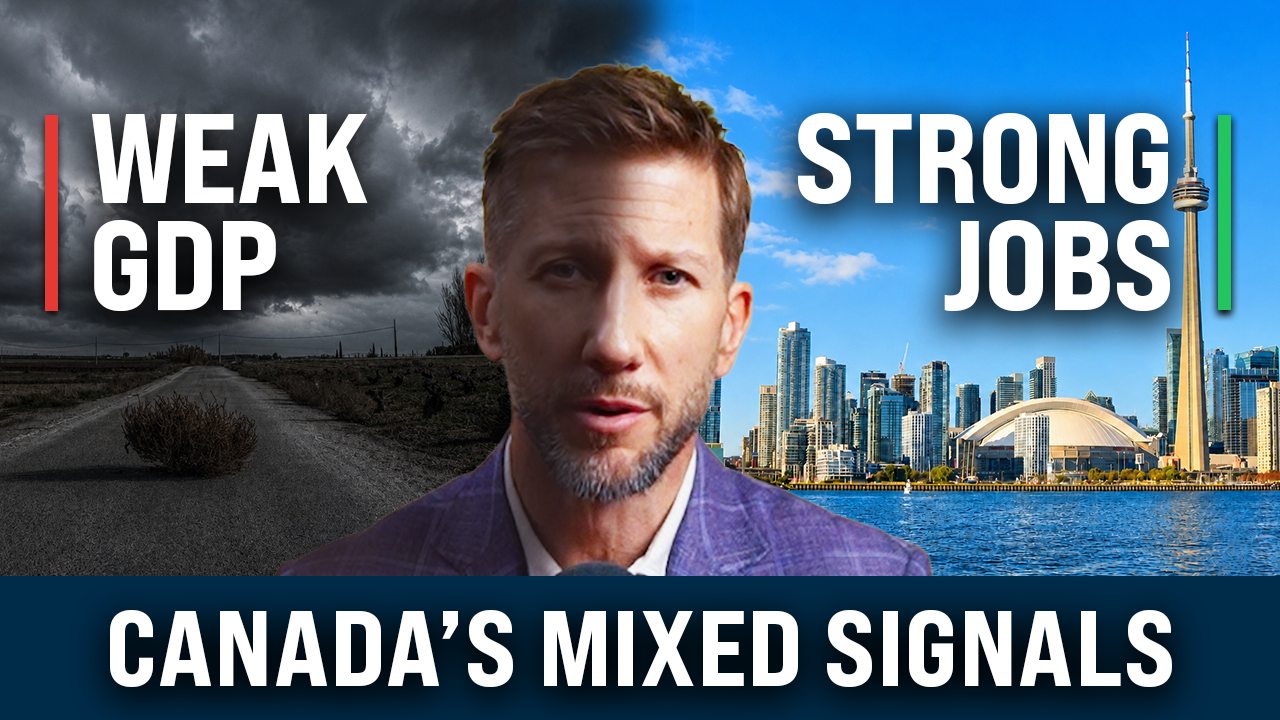
Economic data was mixed. Canada shed 25,000 jobs, a soft reading, while the U.S. added 130,000 jobs, viewed as relatively neutral. U.S. core PCE inflation came in at 2.9%, slightly above expectations, while Canadian CPI was well received at 2.3%. Canadian GDP grew 1.0% year over year, though the annualized quarterly figure was a softer negative 0.6%. None of these softer economic releases bothered markets, but they remain important pieces of the broader economic puzzle.
In several instances, we’ve highlighted that U.S. equities are no longer leading global markets. Investors are increasingly questioning how quickly massive capital spending on artificial intelligence infrastructure will translate into real-world productivity gains. Evidence of this reassessment can be seen in the U.S. software sub-sector, which is down approximately 20% this year.
This provides a nice segue into my February read, Prediction Machines by Ajay Agrawal. I recently heard Ajay speak at the CFA Forecast Dinner here in Calgary. The book frames AI fundamentally as a prediction tool and argues that as the cost of prediction falls, business decision-making will be reshaped. Although I found Ajay’s keynote speech back in January very interesting, the first half of the book reads much like a textbook. It’s organized into 5 sections: Prediction, Decision Making, Tools, Strategy and Society. I found the final two sections, Strategy and Society, the most interesting. They outline how AI will transform our world and industries in years ahead. The key takeaway: AI may displace certain tasks, but it’s more likely to redefine human roles and jobs rather than eliminate them outright. For business leaders assessing AI’s impact, it’s worth a read. For a broader audience, it might be a pass. Overall, a 6.5 out of 10.
Now, I have already picked up next month’s book, which focuses on ways to think about wealth spending and wealth compounding. More specifically, it provides frameworks for spending and building your assets at different stages of wealth. I suspect it will resonate strongly as there is something in it for everyone.
With all the crosscurrents that surfaced in February, how did Matco position portfolios? Importantly, we didn’t react emotionally, we leaned into the themes we entered 2026 with. Across our equity strategies, we added to infrastructure, energy, base and precious metals exposures, areas supported by durable demand, supply constraints, and attractive entry points. On the income side, we added corporate bonds in the nine-year segment of the yield curve, where we see compelling value. We also increased exposure to dividend-paying equities, particularly businesses operating in oligopolies, with strong pricing power and resilient cash flows.
Overall, we’re very pleased with how Matco’s investment platform has performed in the early stages of 2026. We often talk about diversification and discipline. Although it may sound mundane, February is a clear reminder of why those principles matter. Market leadership shifts. Geopolitical risks emerge. Capital flows change direction. These concepts aren’t theoretical; they’re embedded consistently in the five core investment strategies we manage at Matco.
That’s February. If this was useful, follow so you don’t miss the next episode. And drop a comment. I want to know what you’re watching most closely heading into March. I’ll see you next month.Thanks for tuning in month.