March rarely disappoints. March of 2020 marked the onset of COVID, March 2025 brought the “Liberation Day” tariff escalation, and March 2026 delivered the Iran conflict. There is a lot to unpack from this month. The Iran conflict created an energy bottleneck at the Strait of Hormuz. Oil surged, inflation expectations moved higher, and rate cuts were pushed further out. Simply put, March has entirely reshaped the narrative and marks the biggest strategic blunder for the Trump administration. Let’s dive right in.
Coming into the year, we highlighted that declining cooperation on trade policy was very likely to translate to rising geopolitical tension, leading to a more fragile global backdrop. Did we anticipate the developments in Venezuela, Mexico, and Iran to escalate in the first three months of the year? Of course not. Yet it seemed obvious to us that if nations weren’t cooperating on global trade, conflict overall was very likely to rise. In March, that risk moved from theoretical to very much real, and investors have responded accordingly.
For much of the past year, markets have been driven by a fairly consistent set of themes: falling inflation, the expectation of rate cuts, and continued leadership from large-cap technology, particularly related to artificial intelligence. In March, that framework began to change, and it wasn’t driven by earnings or economic data alone. It was, in fact, driven by geopolitics. The escalation in the Middle East involving Iran quickly became the dominant driving force. It wasn’t just another headline; it had direct and immediate implications for global energy markets. With disruption risks around the Strait of Hormuz, one of the most critical arteries for global oil supply, energy prices moved sharply higher. Oil surged well above recent ranges, with WTI now sitting at $100 a barrel and Brent crude around $110.
When energy increases dramatically, it doesn’t stay isolated, it feeds directly into inflation expectations. This brings us to our second key development. As energy prices moved higher, the market began to reassess the path of inflation and, in turn, central bank policy. Earlier this year, there was strong consensus that central banks, including the Bank of Canada and the Federal Reserve, would be easing policy in 2026. But in March, that confidence weakened. Markets have repriced those expected rate cuts, and central banks have reinforced that caution. With inflation remaining sticky, and now potentially reaccelerating due to energy, it becomes much more difficult to justify easing policy prematurely.
It is unfortunate when geopolitics becomes the driving force, because these events can change direction on a dime. With that in mind, we have reduced our rate cut expectations for this year from three cuts down to just one, expected later in the year in September versus our earlier expectation of July.
Shifting to equity markets, which felt the pain in March, the S&P/TSX, S&P 500, and Euro Stoxx 500 all dropped between 7% and 8%. At the same time, beneath the surface, markets were undergoing an important rotation. We saw a clear shift in leadership. Energy, materials, and industrials began to outperform, alongside more defensive areas like utilities. Meanwhile, sectors that had led markets for the past 12 to 18 months, technology and consumer discretionary, lagged significantly. This is consistent with a broader transition away from growth-led leadership toward more cyclical and real asset–oriented sectors.
Commodities more broadly were also a major part of the story. Oil was the most obvious driver, but it wasn’t alone. Gold had been on a strong run, peaking around $5,400 an ounce, before experiencing a sharp pullback to around $4,600. This highlights just how volatile these markets can be, particularly when positioning becomes crowded. Similarly, silver, which peaked around $115, now sits around $73 per troy ounce. The key takeaway is that commodities are once again playing a central role in driving market outcomes, a meaningful shift from a market that, until recently, was primarily driven by technology and AI-related themes.
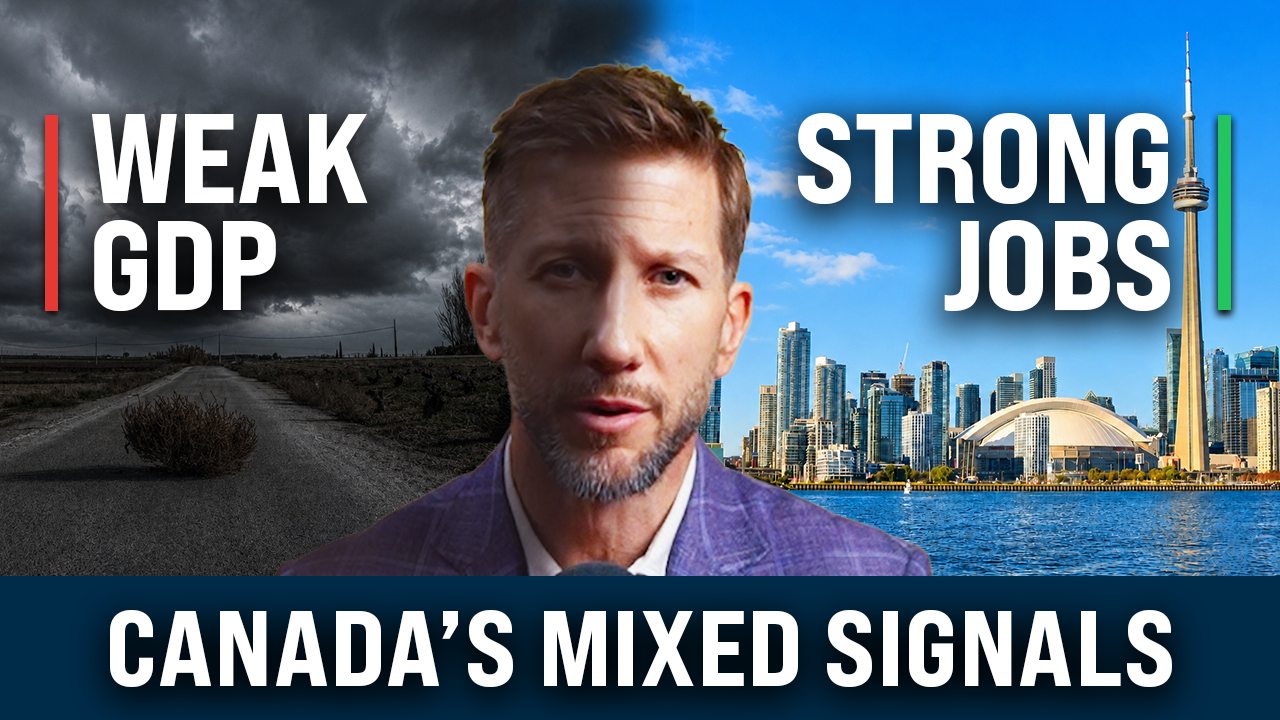
As all of this unfolded, the growth outlook began to soften. Energy prices act as a tax on both consumers and businesses. When you combine that with still-elevated interest rates, you start to see increased pressure on economic activity. The result is a more challenging backdrop where inflation risks are rising and growth expectations are being revised lower.
This is where the Iran conflict becomes President Trump’s biggest blunder yet. With the U.S. midterm election approaching on November 3rd, the political math has shifted materially. Republican odds of holding the House have largely evaporated, and what was a viable path for retaining the Senate is now increasingly at risk. The campaign was built on affordability, but the war has had the opposite effect. Energy prices have surged, with U.S. gas prices rising from roughly $3 per gallon pre-conflict to around $4, a 30% increase. This isn’t a partisan view; it’s a positioning reality. The administration has effectively sacrificed multiple pieces: likely losing the House, jeopardizing the Senate, straining alliances, weakening NATO cohesion, and exacerbating the affordability crisis it aimed to address.
Is there an off-ramp? Possibly, but it likely requires de-escalation. Even then, the damage may already be done. Stepping back, March marked a shift in what is driving markets. We moved away from a market defined by disinflation, rate cuts, and concentrated tech leadership toward one increasingly influenced by geopolitics, energy inflation, and broader sector participation.
From a positioning standpoint, this reinforces the importance of diversification and discipline. Environments like this tend to reward thoughtful balance across sectors, asset classes, and economic outcomes. While periods of transition can create volatility, they also create opportunity.
With that in mind, here’s how we positioned and adjusted our portfolios in Matco’s Global Equity Strategy. We trimmed and took profits on a basket of technology holdings in January, which had performed very well. We added a few companies to the portfolio: PTC, a global leader in product lifecycle management; TransUnion, an American consumer credit reporting agency; and Accenture, a multinational technology consulting firm headquartered in Dublin.
In the Opportunities Strategy, we added to Kits Eyewear, a long-term consumer holding that has performed well since our initial investment in 2023. This year, the stock pulled back enough to justify adding to the position. We also trimmed Valero Energy, which had performed strongly, and added a new name, Metatek, a UK-based technology company.
In the diversified income strategy, we implemented a targeted butterfly trade designed to improve portfolio efficiency. In simpler terms, we reduced exposure to longer-dated government bonds and short-term corporate bonds, while increasing exposure to bonds in the nine to ten year range. This adjustment increased overall yield, improved the quality of income, and reduced sensitivity to rising inflation. We also added a five-year corporate bond issued by Dollarama, a company with strong management and a resilient business model.
We spent the month actively fine-tuning our portfolios. Despite the pace, I managed to get through my monthly read this time, The Wealth Ladder by Nick Maggiulli. The book reframes wealth building as progression through distinct financial stages, each with its own priorities, risks, and decision-making frameworks. Rather than focusing solely on returns, it emphasizes how strategy should evolve as your balance sheet grows. The key takeaway is that successful investors don’t just invest differently, they think differently at each stage.
One of my favorite ideas from the book compares money to an airplane oxygen mask: secure your own before helping others. It’s a simple but meaningful reminder. Another key concept is distinguishing between taxable and non-taxable savings. As investors accumulate wealth, registered and corporate accounts may grow, but building after-tax capital is equally important for flexibility, tax efficiency, and a more accurate reflection of true wealth.
Overall, the book is a practical guide to aligning financial decisions with where you are today and where you want to go. I’d rate it a 7.2 out of 10 and recommend it, especially for those earlier in their wealth-building journey.
That’s it for this month’s edition of Read Between the Lines. Stay tuned for next month, and happy reading!